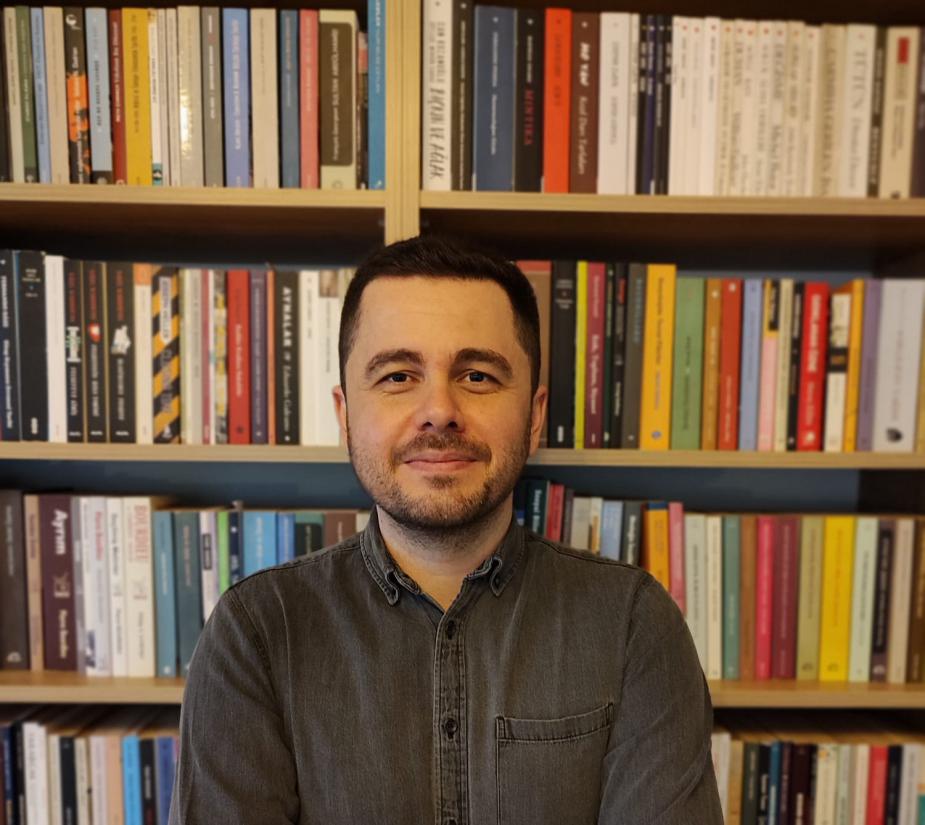
Biography – Education – Research
I am a media and communication researcher with a background in political science. At the moment, I am working at Kirklareli University as an associate professor. During my PhD (2013-2018), I spent one year as a guest researcher at the Freie Universität Berlin Institute for Media and Communication Studies, supported by a Jean Monnet Scholarship. My doctoral dissertation at Galatasaray University was a field study focusing on spatial and communicative practices of post-social movement organizations.
My research interests span the intersection of media and political studies, encompassing climate journalism, political communication, the digital dimensions of affective polarization, urban geography, social movements, and alternative media.
I am part of the management team of the European COST Action DepolarisingEU, serving as both the Science Communication Coordinator and a member of Working Group 3, which focuses on depolarization interventions from civil society and the media. Recently, within the framework of DepolarisingEU (CA22165), we were awarded a grant by TÜBİTAK’s 2515 – R&D Support Program for EU COST Action Members, led by Emre Erdoğan, and I participate as a researcher. Our project is titled “A Multi-Method Analysis of the Impact of Digital Media on Affective Polarization and the Development of an Evidence-Based Intervention Model.” In the next two years, we aim to examine deepening affective polarization in Türkiye’s digital media environment through the interplay between content, audiences, and platforms.
I’m also active on COST Action Relink, which concentrates on political parties’ use of digital technologies to enhance democratic participation and deliberation. We are working on a literature review and expert survey on the concept of “digital party”, a book and dictionary project on party digitalization
I recently published two articles on the findings of my long-running field study with climate journalists in Turkey, drawing on transformative and post-normal journalism concepts in a non-Western context. This research also highlights changing journalistic roles and elaborates on the political, economic, and professional challenges faced by climate journalists, who are decreasing in number.
Çömlekçi, M. F. (2025). Covering environment and climate change in Turkey: transformative journalisms face competitive authoritarianism. Journalism Studies, 26(4), 485-502.
Çömlekçi, M. F. (2025). Climate Change Communication in the Post-Normal Era: The Intersecting Roles of Independent Journalists and Fact-Checkers. Journalism Practice, 1-21.
Also, in my latest paper, I analyzed social media responses from users across different political camps to fact-check stories during an election campaign in Turkey. Findings show that partisans, ignoring factual content, reframe fact-checkers as biased actors and use tactics such as whataboutism, sarcasm, and source discrediting to reject inconvenient truths. The results also highlight how online polarization during elections sustains elite-focused antagonisms and facilitates social exclusion and the scapegoating of minorities.
Çömlekçi, M. F. (2026). Partisans’ online discourses against opposing information: Affective polarization thwarting democratic debate. Communications.
In addition to research, I teach and supervise master’s theses in the political science department. Intercultural communication, alternative media, popular culture, sociology of communication, cultural studies, online journalism, and new media are some of the courses I have taught. I supervised two master’s theses, one on the political framing of climate news, and the other on public diplomacy activities through international students.
I also serve as a reviewer for academic journals such as the International Journal of Communication, Journalism Studies, Journalism Practice, Media and Communication, Tijdschrift Voor Economische En Sociale Geografie, Journal of Intercultural Communication Research, Reflektif, and Media Asia.